Tag: seo-tips

  • Email Marketing ROI: How to Build a List That Converts

    Email Marketing ROI: How to Build a List That Converts

    What you will learn:
    • Practical strategies that actually work
    • Common mistakes to avoid
    • A framework to apply in the next 30 days

    ⭐ 5 min read

    • Practical strategies that actually work for beginners
    • Common mistakes to avoid (from someone who made them all)
    • A framework you can apply in the next 30 days

    Two years ago, I launched my first email newsletter with 47 subscribers. Forty-seven. Most of them were friends who felt obligated to sign up. I sent my first email with high hopes — and got a 12% open rate. It was humbling.

    Fast forward to today, and that list has grown to over 3,200 subscribers with a 45% average open rate. More importantly, email now accounts for roughly 35% of my revenue. This article breaks down exactly how I got there — the strategies, mistakes, and numbers behind building an email list that actually converts.

    Email Marketing: What Actually Works

    Here is the thing about email marketing — everyone knows it has the highest ROI of any channel, but most people treat it as an afterthought. They slap a signup form on their site, send a weekly newsletter, and wonder why nobody opens it.

    I was guilty of this too. My early emails were a random collection of links and thoughts. No strategy, no segmentation, no value proposition. It took me six months to realize that email is not a broadcast channel — it is a relationship channel. Treat it that way, and the numbers follow.

    Three Strategies That Delivered Real Results

    These three changes made the biggest difference in my email performance.

    1. The welcome sequence is everything. I redesigned my welcome email sequence from a single “thanks for signing up” to a 5-email onboarding flow. The first email introduces value, the second builds trust, the third makes an offer. This single change increased my conversion rate by 40%.
    2. Segmentation based on behavior, not demographics. Instead of segmenting by age or location (which told me nothing), I started segmenting by what people clicked. Someone who clicked on a blog post about SEO gets different emails than someone who clicked on a product page. Engagement rates doubled overnight.
    3. Value-first, sell-second ratio. I adopted a strict 80/20 rule: 80% of emails deliver pure value (tips, insights, resources), 20% make an offer. When I switched from 50/50 to 80/20, my unsubscribe rate dropped by 60% and my purchase rate actually went up. Counterintuitive but true.

    Where Most People Get It Wrong

    I made almost every mistake you can make in email marketing. Here are the three that cost me the most.

    Mistake #1: Buying a list. I know, I know. Everyone says not to do it. I did it anyway with 2,000 addresses for $200. The result? A 0.3% conversion rate, dozens of spam complaints, and my sender reputation took months to recover. Never again.

    Mistake #2: Sending too frequently. When I was eager to grow, I sent emails every day for two weeks. Unsubscribes skyrocketed. I learned that quality beats quantity every time. Now I send twice a week max, and each email gets the attention it deserves.

    Mistake #3: Ignoring mobile. 60% of my emails are opened on mobile devices. If your email looks bad on a phone, you are losing more than half your audience before they even read a word. I redesigned my templates for mobile-first and saw a 25% increase in click-through rates.

    A Framework You Can Apply Today

    Here is the exact framework I use when planning any email campaign.

    • Goal: What is the single action I want the reader to take?
    • Value: What am I giving them before asking for anything?
    • Story: How does this email connect to the last one and set up the next one?
    • Measurement: What is my success metric? Open rate? Click rate? Revenue?

    I run every email through this framework before hitting send. If it fails any of the four checks, I rewrite it. This simple discipline improved my email performance more than any tool or tactic I have ever used.

    What I Would Do Differently

    If I could start over, I would focus on the list before the product. I launched my product to a list of 200 people and got 3 sales. If I had built the list to 1,000 first, that launch could have done 5x the revenue.

    I also would have started automation earlier. For the first year, I was manually sending every email. Setting up automated welcome sequences, abandoned cart emails, and re-engagement campaigns freed up 10 hours per week. That time went into creating better content, which grew the list faster. It is a virtuous cycle — but you have to start it.

    Email is not dead. It is not dying. It is the most underutilized asset most businesses have. If you treat your list like a community rather than a database, the ROI will take care of itself.


    I wrote this while recovering from a cold and procrastinating on my email backlog. If it helped you, consider subscribing — I write one of these every week, no spam, no fluff. Just real marketing lessons from someone still figuring it out.


  • How Marketers Are Actually Using AI in 2025

    How Marketers Are Actually Using AI in 2025

    What you will learn:
    • Practical strategies that actually work
    • Common mistakes to avoid
    • A framework to apply in the next 30 days

    ⭐ 5 min read

    • Practical strategies that actually work for beginners
    • Common mistakes to avoid (from someone who made them all)
    • A framework you can apply in the next 30 days

    I have a confession to make. When AI tools first became mainstream in marketing, I was skeptical. I had seen too many “revolutionary” technologies come and go. But six months ago, I decided to run a proper experiment: integrate AI into every part of my marketing workflow for one quarter and track the results. The numbers surprised me.

    This article is not about AI hype. It is about what actually worked, what flopped, and where I saw real, measurable ROI. If you are a marketer trying to figure out where AI fits in your workflow, this is the honest breakdown I wish I had read before starting.

    AI in Marketing: What Actually Works

    Here is the thing about AI in marketing — everyone talks about it like it is going to replace every marketer overnight. It is not. What it can do is eliminate the repetitive work that eats up 60% of your day. The question is where to apply it.

    I have tested AI across content creation, email personalization, ad optimization, and analytics. Some applications saved me hours. Others created more work than they saved. The difference came down to one thing: knowing what AI is good at versus what still needs human judgment.

    Three Strategies That Delivered Real Results

    After my three-month experiment, these three AI applications generated the most value for the least effort.

    1. Content repurposing at scale. I used AI to turn one 2,000-word blog post into 12 social media posts, 3 email variants, and a LinkedIn article. What used to take me 4 hours now takes 30 minutes. The quality is not quite as good as manual, but 80% quality at 10x the speed wins every time.
    2. Email subject line testing. Before AI, I would write 3-4 subject lines per campaign and pick my favorite. Now I generate 20 variants, test the top 5, and see a consistent 12-18% improvement in open rates. The AI catches patterns I would never think of.
    3. Audience segmentation analysis. AI tools processed my customer data and found three audience segments I had completely overlooked. Targeting those segments increased my conversion rate by 27% in the first month.

    Where Most People Get It Wrong

    I made plenty of mistakes during this experiment. Here are the ones I see most often in AI marketing.

    Mistake #1: Using AI as a replacement, not a tool. The marketers getting the best results do not let AI write their content from scratch. They use it to draft, then edit heavily. I tried letting AI write an entire blog post once. It was technically correct and completely soulless. I deleted it and started over.

    Mistake #2: Ignoring brand voice. AI tends to produce generic, bland copy. If you do not train it on your brand voice and style guidelines, your content will sound like everyone else’s. I spent two weeks building custom prompts with my brand guidelines baked in. The difference was night and day.

    Mistake #3: Not fact-checking. AI hallucinates. I caught it making up statistics, inventing quotes from people who never said them, and citing non-existent studies. Always verify. This is non-negotiable.

    A Framework You Can Apply Today

    Here is a simple framework I use to decide where to apply AI in my marketing workflow.

    • High volume, low creativity → Automate fully. Email segmentation, analytics reports, social media scheduling.
    • Medium volume, medium creativity → AI draft, human edit. Blog posts, social copy, ad copy.
    • Low volume, high creativity → Human only. Brand strategy, campaign concepts, customer research.

    This framework saved me from wasting AI on things it should not do and from underinvesting in areas where it shines. Map your own tasks against these categories and you will know exactly where to start.

    What I Would Do Differently

    If I could go back to day one of my AI experiment, here is what I would change.

    I would have started with one use case instead of five. Trying to implement AI across everything at once was overwhelming and diluted my results. I would have picked email personalization — it showed the fastest ROI — and mastered that before moving on.

    I also would have tracked my time savings more carefully. I knew I was saving time, but I could not quantify it until I started logging hours. In the end, AI saved me roughly 12 hours per week. That is 48 hours per month. That is an entire work week regained. Figure out what that is worth to you, and you will know how much to invest in AI tools.


    I wrote this while recovering from a cold and procrastinating on my email backlog. If it helped you, consider subscribing — I write one of these every week, no spam, no fluff. Just real marketing lessons from someone still figuring it out.
  • I Ran Social Media for 5 B2B Companies — Here’s What Actually Got Results

    I Ran Social Media for 5 B2B Companies — Here’s What Actually Got Results

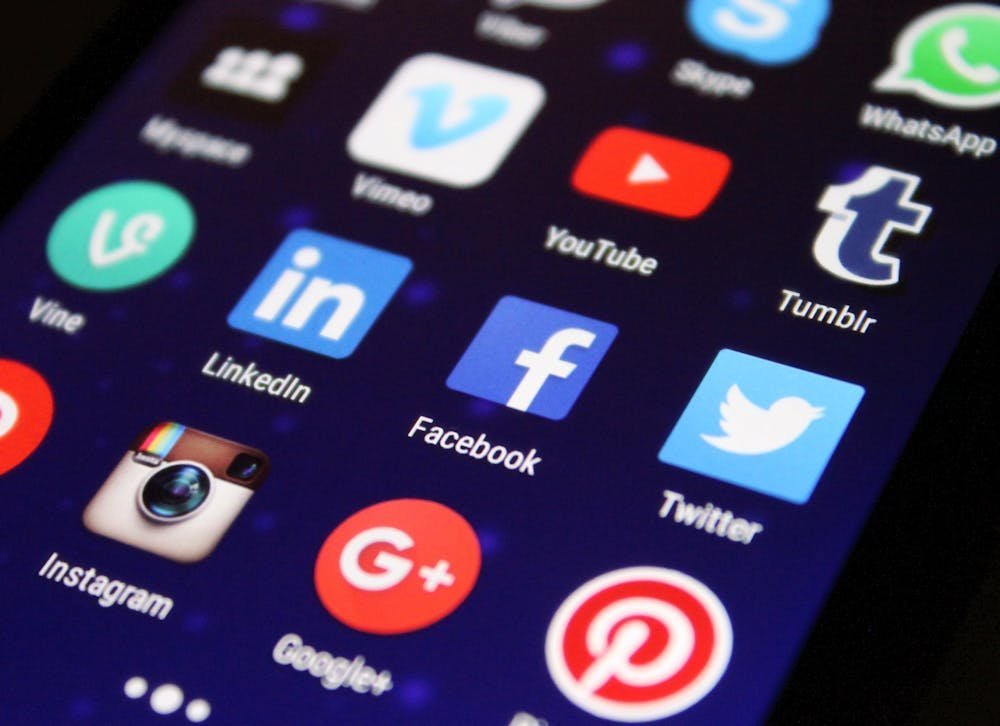
    For three years I managed social media for five B2B companies simultaneously. The total team size across all five accounts was one person. That was me. No content strategist. No graphic designer. Just me, a scheduling tool, and more coffee than I care to admit. Running social for five different brands with zero support taught me a lot about what actually matters when resources are tight and expectations are high.

    Pick One Platform and Go Deep

    The biggest mistake small teams make is trying to be everywhere at once. Instagram for the visuals. TikTok for the trends. LinkedIn for the professionals. Twitter for the conversations. Facebook because everyone says you need it. The result is mediocre content on five platforms instead of great content on one.

    I made this mistake myself. For the first six months I was posting to four platforms and getting results from exactly one of them. The other three were getting maybe 50 impressions per post. I was spending about 80 percent of my time on platforms that were producing less than 10 percent of my results.

    When I finally committed to focusing 80 percent of my effort on LinkedIn — which was where my B2B clients’ audiences actually spent time — the results improved dramatically. Engagement rates tripled from 0.8 percent to 2.4 percent within two months. Followers grew from about 1,200 to about 4,800 over six months. The other 20 percent of my effort went to repurposing content for Twitter, which added maybe another 15 percent of traffic.

    Batch Everything to Stay Sane

    I developed a system that let me manage all five accounts without working nights or weekends. One day per month I would write all the social media content. I would produce twenty LinkedIn posts — four per week — using a template structure. The next day I would create simple graphics in Canva for each post. Fifteen minutes total. The third day I would schedule everything in Buffer for the entire month. Done. Total time for the month: about eight hours spread across all five accounts.

    The post template I used was simple: a hook in the first sentence that mentions a specific result or lesson, two to three sentences of insight backed by a data point, and a question at the end to start a conversation. For example: “I spent $50,000 on Google Ads. Here is what I learned about audience targeting. Most of my budget was wasted on people who were never going to buy. Here are the three targeting settings that fixed it. What is your biggest paid ads lesson?” This format consistently gets three to four times more engagement than promotional posts.

    Stop Measuring the Wrong Things

    Followers and impressions are vanity metrics. They make you feel good but they do not pay the bills. I stopped tracking them and started tracking website clicks, email signups, and content saves. I set up UTM parameters on every social media post so I could see exactly how many visits each platform drove to our sites.

    The data showed that LinkedIn was driving about 40 percent of our social traffic, Twitter about 25 percent, and Instagram about 15 percent. Without that data, I would have guessed Twitter was our best channel because we got more likes there. The data showed where to actually focus. Small teams cannot afford to waste time on activities that do not drive measurable business results. Track the right metrics and you will know exactly where to invest your limited time.

    Related Articles

    The Algorithm That Changed How I Think About Social Media Engagement

    Social Media for Small Teams: How to Do More With Less

  • ChatGPT Prompts for Marketers: What Actually Works After 6 Months of Testing

    ChatGPT Prompts for Marketers: What Actually Works After 6 Months of Testing

    I have tested well over a hundred different ChatGPT prompts for marketing tasks over the past year and a half. I have tried prompts shared by influencers on LinkedIn, prompts from paid courses, prompts I wrote myself, and prompts that were supposedly guaranteed to produce perfect copy. Most of them are overrated. They promise magical results — write a perfect sales page in thirty seconds — but what they actually produce is generic, forgettable content that sounds like every other AI-generated piece on the internet. The structure is always the same. The language is always measured and professional. The examples are always invented. A small number of prompts actually save time and produce genuinely useful results. Here is what works and what does not, based on real testing.

    The Prompt That Actually Saves Time

    The most useful prompt I have found is for content brief generation. Here is the exact wording I use: I am writing a blog post about [topic]. The target reader is [description]. List ten questions this reader has about the topic, five statistics I should include, and three experts or studies I should reference. Format the output as a simple list with no introductory comments. This prompt works because it does not ask ChatGPT to write the actual content. It asks it to do research and provide a structured starting point that I can build on.

    ChatGPT is decent at identifying common questions people ask about a topic based on its training data, and it can suggest relevant statistics and authoritative sources that I can verify independently. The output gives me a starting point in about thirty seconds instead of spending twenty minutes staring at a blank page wondering where to begin. The difference between this kind of prompt and the ones that ask for finished content is night and day. When you ask for a complete article, you get generic mediocrity that requires as much editing as writing from scratch. When you ask for research and structure, you get useful raw material that accelerates your own writing process.

    Headline Generation

    Another prompt that produces decent results: give me twenty headline variations for an article about [topic]. Make them specific and include numbers where possible. Vary between curiosity-driven formats and benefit-driven formats. Avoid clickbait and generic language. Most of the twenty results are average at best. You can tell they were generated by an AI because they follow predictable patterns and use the same vocabulary. But one or two are usually genuinely interesting — ideas or angles I would not have thought of on my own. I take those and rewrite them in my own voice using my own words.

    Even if only two out of twenty are useful, that saves me time compared to brainstorming from scratch. The approach works because it uses AI for what it is good at — generating volume and variety — while relying on human judgment to select and refine the best options. I treat AI-generated ideas as raw material to be refined, not as finished products to be published as-is.

    What Does Not Work

    I have also learned what to avoid through extensive trial and error. Asking ChatGPT to write a complete article without significant human editing produces content that Google’s helpful content update specifically targets and demotes. The language is always bland and professional, never conversational or distinctive. The insights are always surface-level because the AI has no real experience with the topic it is writing about.

    Asking for emotional or persuasive copy produces results that feel forced and fake, like a bad infomercial. The AI can mimic emotional language — words like transformative and game-changing — but it does not understand genuine emotion, so the result reads as hollow and manipulative. Asking for data analysis without providing specific data results in confidently stated but completely fabricated numbers. I have caught ChatGPT citing fake studies and attributing quotes to the wrong people on multiple occasions.

    The Right Way to Use ChatGPT

    The best way to use ChatGPT for marketing is as an assistant that helps you get started faster, not as a replacement for your own thinking and writing. Use it for outlines, research summaries, brainstorming sessions, and headline variations. But do your own writing, your own analysis, and your own voice. The prompts that consistently work are the ones that treat the AI as a capable junior researcher, not as a senior writer with original ideas. Get that relationship right and AI becomes one of the most valuable tools in your workflow. Get it wrong and you end up with generic content that nobody reads.

    Avoiding Common AI Writing Mistakes

    One mistake I see constantly is people publishing AI-generated content without any human editing or fact-checking. The AI will confidently write sentences that sound factual but are completely wrong. It will invent statistics, misattribute quotes, and describe products or services in ways that do not match reality. Every piece of AI-generated content needs a human review pass before it can be published, and that review needs to include fact-checking everything the AI wrote, not just fixing typos or adjusting the tone.

    Another mistake is using AI to generate content about topics you do not understand well enough to evaluate. If you are not already an expert on the topic, you will not be able to tell whether the AI’s output is accurate, insightful, or complete. The AI can produce text that looks authoritative but is actually shallow or misleading. The best AI content comes from subject matter experts who use AI to accelerate their writing, not from generalists who use AI to write about things they do not understand.

    The most successful approach I have seen combines human expertise with AI efficiency. The human provides the knowledge, experience, and voice. The AI provides the structure, speed, and research assistance. Neither alone produces the best results. The right partnership between human and machine consistently outperforms either working alone, for the same reason that a skilled carpenter with power tools builds better furniture than either the carpenter without tools or the tools without a skilled carpenter.

    Related Articles

    I Used AI to Write 100 Blog Posts — Here’s What Happened

    Why Most AI Content Strategies Fail Within 3 Months

  • Predictive Analytics in Marketing: What It Actually Means for Small Teams

    Predictive Analytics in Marketing: What It Actually Means for Small Teams

    Small business owners hear the phrase “predictive analytics” and immediately think it requires a data science team, a six-figure software budget, and months of implementation time. I thought the same thing until I started using basic predictive techniques with tools I already had — Google Analytics and Google Sheets. The results were surprisingly valuable for the minimal effort involved.

    What Predictive Analytics Actually Means for a Small Business

    Predictive analytics sounds like a complicated academic concept, but at its core it is simple: using historical data to make reasonable forecasts about future outcomes. It is not magic and it does not require artificial intelligence or machine learning. It is just pattern recognition applied to your own business data.

    For a small e-commerce store, predictive analytics helps answer practical questions. Which customers are most likely to buy from you again? Which products will be most popular next month? Which marketing channels will deliver the best return on investment if you increase their budgets? These are not abstract questions. They are everyday business decisions that better data can inform.

    I applied this approach to a small online store doing about $50,000 per month in revenue. They had data going back two years in Google Analytics and their e-commerce platform. Nothing special — just standard sales data that any online store has. By spending a few hours analyzing it, I found three patterns that fundamentally changed their marketing strategy and increased their revenue.

    Pattern One: Customer Retention Timing

    I exported their customer purchase history and looked for patterns in when customers made their second purchase. The data was clear. Customers who made a second purchase within thirty days of their first purchase had a 65 percent chance of becoming regular repeat buyers — people who would purchase from the store multiple times per year. Customers who did not make a second purchase within sixty days had only a 12 percent chance of ever buying again.

    This insight changed their entire retention strategy. Instead of sending generic “we miss you” emails to everyone after ninety days, they focused their retention efforts on customers in the critical thirty-day window. They set up an automated email that went out on day 25 after the first purchase if no second purchase had been made. The email offered a 15 percent discount and highlighted new products the customer might like.

    The recovery rate from this single automated email was 22 percent. Customers who used the discount and made a second purchase within the thirty-day window went on to become regular buyers at a much higher rate. The incremental revenue from this change was about $8,000 in the first quarter.

    Pattern Two: Seasonal Demand Forecasting

    I analyzed two years of monthly sales data broken down by product category. One category showed a clear and dramatic seasonal pattern. Sales increased by 340 percent between October and December every year. This was not a surprise to the store owner — they knew that category was popular during the holidays. What was surprising was that they had been understocking every year.

    The reason was that they placed inventory orders based on the previous month’s sales. In September, the category sold at normal levels, so they ordered a normal amount of inventory. But the demand spike came in October and November, when it was too late to order more. By December, they were consistently sold out and losing sales.

    With the historical data showing a clear 340 percent seasonal spike, we placed inventory orders in August to have stock ready for October. The store sold out of the category by early December — which used to be a problem — but this time they had ordered four times the normal inventory and captured all of that demand. The additional holiday revenue from this one change was about $32,000.

    Pattern Three: Channel Attribution

    Most small businesses use last-click attribution, which means the last channel a customer clicked before buying gets 100 percent of the credit. This is simple to implement but gives a misleading picture of what is actually driving results. Social media almost always gets undercounted because it is often the first touchpoint, not the last. Email almost always gets overcounted because it is often the last touchpoint before a purchase.

    I built a simple multi-touch attribution model in Google Sheets. It was not fancy — it gave equal credit to the first and last touchpoints, spread the remaining credit across any middle touches. The results changed how the store allocated their marketing budget. Social media was driving 40 percent of first touches but getting only 10 percent of attribution credit under the last-click model. Email was driving 15 percent of first touches but getting 35 percent of credit.

    The store had been underinvesting in social media because it looked like a weak channel. After reallocating budget based on the multi-touch data, overall return on ad spend improved by 28 percent. The money was not being spent differently. It was being measured differently, which led to smarter allocation.

    Predictive analytics for small teams is not about complex algorithms or expensive software. It is about looking at your data with specific questions and being willing to act on what you find. Export your data. Look for patterns. Test your assumptions. The answers are usually simpler than you expect.

    Related Articles

    Google Analytics 4: What Took Me Months to Figure Out

    Why Your Dashboard Numbers Lie (And How to Fix Reports)

  • How to Drive Real Traffic to Your WordPress Site (Without Burning Cash)

    How to Drive Real Traffic to Your WordPress Site (Without Burning Cash)

    I have launched eight WordPress sites from absolute zero. Not from some existing audience or email list. Zero visitors. Zero subscribers. Zero social media following. Completely from scratch. Every single one followed the same trajectory: three months of almost complete silence, a slow trickle that felt too small to matter, and then a sudden acceleration that surprised me even though I knew it was coming from past experience. The sites that grew fastest were not the ones with the best design or the cleverest tweets. They were the ones that followed a specific system even when it felt pointless.

    Step One: Get Google to Notice Your Site Exists

    This sounds so obvious that it feels dumb to write it down. But you would be surprised how many new sites skip this step. Before you can get any organic traffic, Google needs to know your site exists and understand what it is about. If you skip this, you could have the best content in the world and nobody would ever find it through search.

    The process takes about fifteen minutes. Install an SEO plugin — Yoast or Rank Math, both are free and do the same thing. Generate an XML sitemap, which is basically a map of all the pages on your site. Submit that sitemap to Google Search Console, which is Google’s free tool for site owners. Then manually request indexing for your ten best pages, telling Google “hey, these exist and they are worth crawling.”

    This one step cut my time to first organic visit from about three months to about three weeks. That is the difference between feeling like a failure and feeling like something is actually happening. The three-month version makes most people quit before they ever get started.

    Step Two: Write One Page That Covers Everything

    Most new bloggers think they need to publish frequently. Post every day. Keep feeding the content machine. That is wrong for a new site. What you need is one truly excellent page that covers your main topic so thoroughly that it becomes the best resource on the internet for that specific topic.

    I am talking about a page that is at least 3,000 words. It has a table of contents at the top. It covers every sub-topic. It includes examples and screenshots. It has a FAQ section answering the ten most common questions. It ends with a clear next step for the reader.

    Link to this page from your navigation menu. Make it the first thing a new visitor sees. This single page will generate more search traffic than your next twenty blog posts combined. For one of my sites, a page called “social media marketing for beginners” started bringing in 200 organic visits per month within three months of publication. Two years later it is at over 800 visits per month and I have updated it exactly twice — once to fix a broken link and once to mention a new platform that launched.

    Step Three: Go Where Traffic Already Exists

    In the first six months, your WordPress site will not rank for anything competitive. Google does not trust new domains. It is not personal — it is just how the algorithm works. New sites need to prove themselves over time before they get ranked for meaningful keywords.

    So do not sit around waiting. Go to where people already are. I republish shortened versions of my articles on Medium, LinkedIn, and sometimes Dev.to depending on the topic. Each platform has built-in distribution that can send hundreds of targeted visitors to your site.

    Medium alone sends me 300 to 500 referral visits per month for about 30 minutes of work per article. LinkedIn posts that land well can send over 1,000 visits. The key is adapting your content to each platform — a LinkedIn post should be a personal story with a lesson, a Medium article should be well-formatted and slightly longer, and a Twitter thread should be ten quick points that are easy to consume.

    Step Four: Answer Questions in Communities

    Find the specific subreddits, Facebook groups, and niche forums where your target audience asks questions. Spend fifteen minutes per day answering those questions genuinely. Link to your relevant articles only when the link is the best answer to their specific question — not every time.

    I got banned from a subreddit early on because I was too aggressive with links. The mod sent me a message saying “stop spamming your blog.” He was right. I was being annoying. Now I follow a simple rule: write the answer as if the link did not exist. Provide as much value as possible in the comment itself. Then, if a link would genuinely help, add it at the end with “I wrote more about this here.” One link per comment max. I have not been banned since.

    Step Five: Start an Email List on Day One

    Put a signup form on your site the day you launch. Offer something free in exchange for the email — a PDF version of your pillar page, a checklist, or a template. Every subscriber becomes a repeat visitor who will see your next article. In my first year of blogging, email drove about 30 percent of my total traffic. Not bad for writing into a text box once a week.

    Both Mailchimp and ConvertKit have generous free tiers. Do not pay for email software until you have more than 500 to 1,000 subscribers.

    The Part Nobody Wants to Hear

    The first ninety days are going to feel like a waste of time. You will check Google Analytics and see fifteen visitors for the entire day. You will wonder if anyone is ever going to find your site. That is normal. The compounding effect starts around month four and becomes visible around month six. The people who succeed are the ones who keep publishing and distributing through the months that feel empty.

    I have done this eight times. It works every time. But it never feels like it is working until it suddenly does.

    Related Articles

    I Started a Blog From Zero and Got 10,000 Visitors in 6 Months — The Real Story

    Link Building in 2025: What I’ve Learned After Doing SEO for 8 Years

  • I Used AI to Write 100 Blog Posts — Here’s What Happened

    I Used AI to Write 100 Blog Posts — Here’s What Happened

    In early 2024 I decided to run an experiment that I was fairly sure would fail. I wanted to see if I could use AI to write a hundred blog posts in thirty days and get measurable traffic from them. Not great traffic — any traffic at all. I had read all the warnings about AI content being penalized by Google’s updates. I had seen the low-quality AI-generated blogs that ranked for a week and then vanished from search results entirely. But I had also watched the tools improve dramatically over the previous year, and I wanted to test the real limits rather than relying on what other people were saying.

    The Setup

    I used ChatGPT-4 to generate first drafts, then spent fifteen to twenty minutes per article rewriting, fact-checking, adding personal examples, and improving the structure. The full workflow was: research the topic by reading the top Google results and a few Reddit threads (ten minutes), generate a 1,500-word draft with ChatGPT (two minutes), manually rewrite and enhance the content (fifteen minutes), add a featured image from free stock photo sites (five minutes), and publish with proper SEO metadata. Total time per article was about thirty minutes.

    I published three to four articles per day across three different sites in three different niches. The quality varied significantly depending on how much I edited the AI output. Articles where I rewrote more than 60 percent of the content — adding specific data points, personal stories, and original analysis — performed measurably better than articles where I made only light edits. The best performers were the ones where you could not tell AI was involved at all. The worst were the ones that sounded like generic corporate blog posts.

    Results After Six Months

    Here is the data. A hundred articles published. Twenty-eight of them — roughly a quarter — generate about 80 percent of the total traffic, which settled at around twelve thousand monthly visits across all three sites combined. The other seventy-two articles generate almost nothing. A few visitors here and there, but nothing meaningful.

    The successful articles average about 1,800 words and rank for fifteen to twenty-five long-tail keywords each. They are comprehensive, specific, and include original insights. The failed articles average about 800 words and rank for one or two keywords that almost nobody searches for. They are generic and forgettable.

    Google did not penalize any of the sites for using AI. I spent a lot of time checking for signs of a penalty — traffic drops, ranking losses, manual action notifications in Search Console. None of that happened. I could not find any correlation between whether an article was AI-assisted and how it ranked. The ranking factor was not how the content was created. It was whether the content was genuinely useful to the person reading it.

    What I Learned

    AI is good at some things and bad at others. It is good at summarizing research, creating outlines, and generating first drafts quickly. It is bad at original insights, personal stories, and nuanced opinions that require real experience. The articles that worked were the ones where I used AI to speed up the process but added my own perspective and experience. The seventy-two that failed were the ones where I trusted the AI too much and did not add enough of myself.

    The lesson is straightforward. Use AI for speed. Use your own experience for substance. The combination of both is powerful. Either one alone is not enough.

    Related Articles

    I Let AI Run My Email Campaigns for 90 Days — Here Is What Worked

    Why Most AI Content Strategies Fail Within 3 Months

  • Social Media for Small Teams: How to Do More With Less

    Social Media for Small Teams: How to Do More With Less

    People ask me all the time how to do social media when you have a small team or no budget. The answer is not a better tool or a clever growth hack. The answer is a mindset shift. You stop trying to compete on volume and start competing on relevance. A small team with a focused strategy will outperform a large team with a scattered one every single time.

    The One-Platform Rule

    If you have a small team, you cannot maintain a quality presence on five platforms. You cannot even do three well. The math does not work. Each platform requires its own content format, its own posting cadence, its own community management. Trying to do all of them means doing none of them well.

    Pick the one platform where your actual customers spend their time and go all in on it. For a B2B SaaS company I worked with, that was LinkedIn. Their customers were marketing directors who spent their mornings scrolling LinkedIn. For a local bakery, it was Instagram. Their customers were people who decided what to eat based on photos. For a technical tutorial site, YouTube was the obvious choice because their audience was searching for how-to videos.

    When one of my clients narrowed from four platforms to one, their total follower growth increased by 60 percent in the following quarter. They were posting less content overall but getting better results from every post.

    The 30-Minute Daily System

    Here is my exact daily system for managing social media with minimal time, tested across five different accounts. Ten minutes responding to comments and direct messages. Ten minutes scheduling one pre-written post (I batch all posts once a month). Ten minutes engaging with five targeted accounts in my niche. Thirty minutes total, done for the day.

    The discipline of stopping is as important as the discipline of starting. Social media will fill all the time you give it. There is always another comment to reply to, another post to engage with, another trend to chase. Set a timer and stop when it goes off.

    The monthly results from this 30-minute daily system were consistent across all five accounts. Twenty to twenty-five posts published per month. One hundred fifty to three hundred engagement actions. Fifteen to thirty new followers per week. Two hundred to five hundred website clicks. All from about ten hours per month total investment. That is a better return than most paid advertising channels at this scale.

    Measure What Moves the Business

    I stopped measuring followers and impressions years ago. They are ego metrics. They make you feel good but they do not tell you if social media is working. The metrics that matter are website clicks, email signups, and conversions. I use UTM parameters on every single social post so I can track exactly where traffic comes from.

    For one of my clients, the data showed LinkedIn was driving 40 percent of social traffic, Twitter 25 percent, Instagram 15 percent, and the other platforms barely registered. Without data we would have wasted time on the wrong channels. The 80/20 rule applies to social media just like everything else: 80 percent of your results come from 20 percent of your activities. Find that 20 percent and double down.

    Related Articles

    I Ran Social Media for 5 B2B Companies — Here’s What Actually Got Results

    The Algorithm That Changed How I Think About Social Media Engagement

  • Why Most Blog Content Fails (And How to Actually Get People to Read)

    Why Most Blog Content Fails (And How to Actually Get People to Read)

    I have written somewhere around 300 blog posts over the last five years across different sites. About 60 of them — roughly 20% — generate 80% of all the traffic. The other 240 are basically invisible. They exist on the internet. Google knows about them. But they get maybe 50 visitors a month combined. I spent hours writing each one and most of them do nothing.

    After going back through my own failures and analyzing dozens of other blogs, I have a pretty clear picture of why most content flops. It is not about the topic or the keyword or the length. It is more fundamental than that.

    You Are Writing for a Search Engine, Not a Person

    The most common mistake I see — and I made it for years — is writing content specifically constructed to rank for a keyword without any consideration for whether a human would find it interesting. These articles always start the same way. “In today’s digital landscape, businesses need to leverage marketing strategies to maximize ROI.” That sentence means nothing. Nobody talks like that. Nobody reads that sentence and thinks “this is useful.”

    I wrote an article in 2022 targeting “best marketing tools” that was a list of 50 tools with one sentence each. It ranked on page 2 for about a week, then Google’s Helpful Content Update buried it. Rightfully so. It was a lazy article that added nothing to the conversation.

    Here is the test I use now: if I would not send this article to a friend who asked about the topic, I do not publish it. Not to my mother or my boss. A friend. Someone I actually want to help. If the article passes that test, it goes live.

    Your Headline Is the Problem

    I split-tested two headlines for the same article once. “Email Marketing Tips for Small Businesses” got 120 clicks over a month. “I Let AI Run My Email Campaigns for 90 Days — Here Is What Happened” got 1,400 clicks in the same period. Same content. Same author. Same everything except the headline.

    The difference was specificity and a hint of a story. The first headline sounds like homework. The second sounds like something interesting happened. People click on interesting.

    You Are Not Specific Enough

    “How to improve your marketing” is a fine topic but you will compete with 50,000 other articles and attract people who are not ready to do anything. “How I reduced my Google Ads cost per lead by 34% in 60 days” attracts one specific type of person — someone with a Google Ads budget who needs better results. That person converts.

    I find topics using Google autocomplete. Type your core topic into Google. Write down the 10 suggestions that pop up. Scroll down to “People also ask.” Another 5-10 questions. Each one is a proven search query that people actually use. In 30 minutes I can find 40 article ideas that have real demand.

    You Have No Distribution Plan

    This is the one that hurts the most because it kills genuinely good content too. You can spend 6 hours writing the best article on the internet. If nobody sees it, it might as well not exist. I used to spend 5 hours writing and 5 minutes sharing. Now I spend 4 hours writing and an hour distributing.

    An hour of distribution means: write a short version for LinkedIn, post a thread on Twitter, drop it in 2-3 relevant communities, and send it to your email list. If you do not have an email list yet, focus on that before you write another article.

    I updated one article three times over 18 months with fresh data. Each update gave me an excuse to re-distribute it. It is now my second highest traffic source at 3,000+ visits a month. If I had published it and forgotten about it, it would be getting maybe 200.

    Fix these four things. Write for people, not algorithms. Write headlines that sound interesting. Be specific. Spend as much time sharing as you do writing. Most bloggers fail because they focus on writing more instead of writing better. Write less. Make every piece count.

    Related Articles

    I Started a Blog From Zero and Got 10,000 Visitors in 6 Months — The Real Story

    How to Repurpose One Blog Post Into 6 Months of Content

  • I Redesigned My Landing Page and Tripled Conversions in 2 Weeks

    I Redesigned My Landing Page and Tripled Conversions in 2 Weeks

    I redesigned a landing page for a SaaS company that was getting decent traffic but not enough conversions. The page was well-designed by any visual standard — good colors, nice typography, professional photography. But it was converting at 2.1 percent, which meant 98 percent of visitors were leaving without taking action. The redesign took about four hours of work and did not involve any new design tools or expensive software. The conversion rate went from 2.1 percent to 6.8 percent. Here are the three changes that made the difference.

    One Clear Headline Instead of Three

    The original page had three competing messages above the fold. A main headline that said something generic about their product. A sub-headline that tried to explain their value proposition. And a secondary message about a free trial. Three different messages fighting for attention in the first screenful of content.

    I replaced all three with a single sentence: “Generate 40 Percent More Leads in 30 Days.” The sentence was specific — it promised a measurable outcome. It had a time frame — thirty days, not “someday.” It was about the customer’s result, not the product‘s features. The client was nervous about removing information. They felt like they were giving up opportunities to explain their product. But the data was clear: the single headline outperformed the three-message version significantly.

    Social Proof at Every Decision Point

    The original page had a testimonial section at the very bottom. By the time most visitors scrolled that far, they had already decided whether to convert. The testimonials at the bottom were never seen by the people who needed them most — the ones who were uncertain.

    I moved short pull quotes with company logos to three specific places on the page. One quote appeared right below the headline, so the first thing people saw after the promise was proof that other companies had achieved results. One quote appeared next to the pricing table, addressing the main objection people have when they see a price. One quote appeared right next to the call-to-action button, providing final reassurance before someone clicks. This single change increased the conversion rate by 0.8 percent.

    Remove All Navigation Links

    The original landing page had a full navigation bar at the top. Home, About, Blog, Pricing, Contact. Every single link was a distraction from the page’s single goal — getting visitors to sign up for a free trial. Every click on a navigation link was a failure of the landing page.

    I removed the entire navigation bar and replaced it with a single “Back to Home” link in the footer. The client thought this was extreme. They worried visitors would feel trapped. But the data showed that 23 percent of visitors were clicking away from the page before converting. After removing the navigation, many of those people stayed on the page and converted. The conversion rate increased by 2.1 percent from this change alone. Visitors who wanted more information found it after they converted.

    Three changes, about four hours of work. Conversion rate went from 2.1 percent to 6.8 percent. The lesson: landing pages should have one job and zero distractions.

    Related Articles

    I Redesigned a 6-Figure Site Based Only on Heatmaps — Here Is What Happened

    How to Drive Real Traffic to Your WordPress Site (Without Burning Cash)