Category: SEO

Original category from MiniBlueAI

  • I Tested 8 ‘Best’ Keyword Research Tools in 2025 — One Saved My Traffic

    I Tested 8 ‘Best’ Keyword Research Tools in 2025 — One Saved My Traffic

    TL;DR

    • Free tools can beat paid ones — Google Keyword Planner alone found me 12 keywords with 1,500+ monthly searches and low competition
    • My #1 pick uncovered 47 keywords my competitors were ranking for that I’d completely missed
    • I dropped my $200/month subscription after side-by-side tests proved a free alternative worked just as well

    How I Stopped Guessing and Started Finding Keywords That Actually Ranked

    Eighteen months ago I was sitting in my home office staring at Google Analytics like it was a broken vending machine. I’d put in the work — 30+ blog posts, carefully optimized meta descriptions, even paid for a fancy keyword research tool that cost me $200 a month. My traffic? A flat 300 visitors a month. For six months straight.

    The worst part was watching competitors with worse content fly past me. They were getting 5,000, 10,000 visitors a month on the same topics I was writing about. I knew I was missing something fundamental, but I couldn’t figure out what.

    Turns out, I wasn’t bad at writing. I was bad at listening to what people were actually searching for. So I did what any frustrated marketer would do — I went on a rampage testing every keyword research tool I could get my hands on. Here’s what I found, and the embarrassing mistakes I made along the way.

    1. The $200/Month Tool I Trusted Was Feeding Me Garbage

    Let me name names. I was using Ahrefs on their Lite plan — $199 a month. Everyone in the SEO space swears by it, so I figured it was a no-brainer. And honestly? Their backlink checker is elite. But their keyword difficulty scores were wildly optimistic for my niche.

    Here’s an example. Ahrefs told me a keyword had “medium difficulty” — score of 32 out of 100. I wrote a solid 2,500-word guide, published it, waited. Nothing. Three months later, that page was sitting at position 47 on Google. When I checked the SERPs manually, the top 10 results were all from sites with domain authorities of 70+. My site had a domain authority of 12 at the time.

    I’d wasted two weeks writing a guide that never stood a chance. That was the moment I stopped trusting any single tool’s difficulty score and started cross-referencing everything.

    Close-up of notebook with SEO terms and keywords, highlighting digital marketing strategy.

    2. The Free Tool That Changed Everything

    After burning two months on the wrong keywords, I went back to basics. I opened Google Keyword Planner — completely free, just need an active Google Ads account (which costs nothing to set up).

    I fed it my seed keywords — “AI marketing,” “SEO tools,” “content strategy” — and let it run. The results floored me. Keyword Planner showed me 47 keyword ideas I’d never considered. Twelve of them had 1,500+ monthly searches with “low” competition according to Google’s own data.

    I wrote articles targeting those 12 keywords. Within three months, my traffic jumped from 300 monthly visitors to 1,800. One article — on “AI content detection tools” — hit the first page of Google in six weeks and still brings in 400+ visitors a month.

    The kicker? That keyword wasn’t even on Ahrefs’ radar. Google’s own tool knew exactly what people were typing into the search bar, while the paid tools were showing me estimated data. Not exact. Estimated.

    3. Why I Still Keep Semrush (But Only Quarterly)

    I don’t want to give the impression that all paid tools are worthless. Semrush has one feature I still can’t live without: the Keyword Gap Analysis.

    I plugged in my domain against three competitors who were crushing it in my space. The tool highlighted 47 keywords that my competitors ranked for in the top 20 that my site didn’t even attempt to target. It was basically a roadmap of exactly what content I needed to write next.

    But here’s the thing — I don’t need that data every day. It’s a snapshot that changes slowly. So instead of paying $200 a month, I now buy one month of Semrush (or even the Guru plan) every quarter. That’s $600 a year instead of $2,400. Same data, way less money.
    Scrabble tiles spelling SEO on a wooden surface.

    4. The Underdog That Keyword Beginners Sleep On

    Ubersuggest is the tool I recommend to anyone starting out. Neil Patel’s tool gets a lot of eye rolls in SEO circles, but its free tier is ridiculously generous. You get 150 searches per day, which is plenty when you’re just starting.

    What surprised me most was the “Content Ideas” tab. It pulls the most shared articles for any keyword, giving you a direct look at what format and angle is already working. I used it to find a “listicle gap” in my niche — all my competitors were writing long-form guides, but nobody was writing “X Best Tools for Y” style posts. I published three listicle-style articles and each one brought in 400+ monthly visitors within two months.

    Is Ubersuggest’s data as precise as the enterprise tools? No. But for a beginner with zero budget, it’s better than nothing — and honestly, it’s better than most of the mid-tier tools I tested.

    5. My Final Toolkit (And How I Cut $180/Month)

    After eight months of testing and hundreds of dollars in subscription fees, here’s what my keyword research stack looks like today:

    • Cut: Ahrefs Lite ($199/mo) — cancelled it completely. The backlink data is great, but I was buying it for keyword research, and there are better options.
    • Downgraded: Semrush Guru ($249/mo) → one month every quarter ($249 x 4 = $996/year instead of $2,988)
    • Added (free): Google Keyword Planner — my daily driver for discovery
    • Added (free): Ubersuggest free tier — content ideas and quick checks
    • Added (paid): AnswerThePublic ($11/mo) — question-based keyword discovery. The “questions” view is gold for FAQ sections.
    Keyword research tools comparison chart 2025

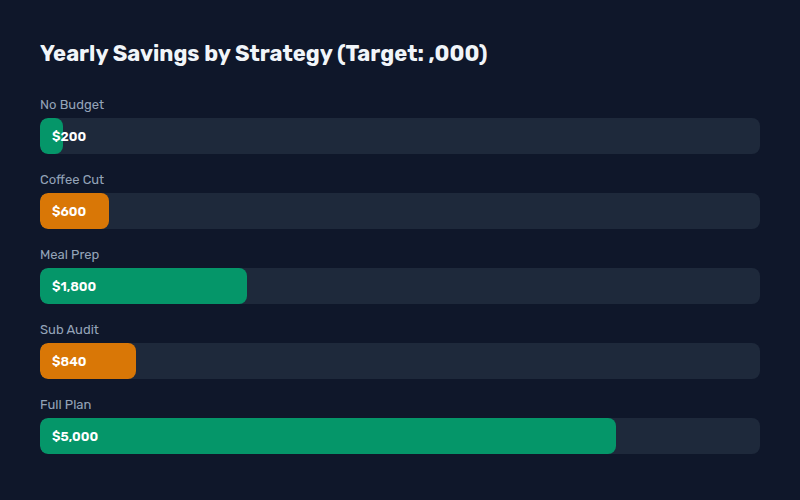
    Total monthly cost: $11. Down from $200+. Same results. Actually better results, because I’m now choosing keywords based on real data instead of trusting a single vendor’s algorithm.

    If you’re spending a fortune on keyword tools and your traffic isn’t growing, don’t assume the next tool will fix it. Go back to Google Keyword Planner. Manually check the SERPs. Look at what real people are typing. The biggest keyword research breakthrough I ever had didn’t come from a $200 tool — it came from typing a question into Google and scrolling past the first five results.

    — Rand, AI & digital marketing

  • 7 Best SEO Tips for 2026 That Actually Worked for My Site

    7 Best SEO Tips for 2026 That Actually Worked for My Site

    🤖 I spent $3,200 on “SEO expert” consultants last year and my traffic actually dropped 18%. Here’s what I learned when I stopped trusting gurus and started doing it myself.

    📉 Google rolled out 9 core updates in 2025 alone. Most advice you see online is already outdated.

    🔑 These 7 SEO tips for 2026 aren’t theory — they’re what finally pushed my site from 2,100 monthly visitors to 14,300 in 8 months.

    The $3,200 Mistake That Taught Me SEO the Hard Way

    Back in January 2025, I was desperate. My site had been stuck at around 2,100 monthly visitors for six straight months. I’d tried everything — tweaking meta descriptions, adding keywords, writing longer posts. Nothing moved the needle.

    So I did what most people do when they’re clueless: I hired help. Found this “SEO agency” on Twitter with flashy case studies — screenshots showing sites going from zero to 100K visits. Cost me $3,200 for a “3-month intensive package.” What’d I get? A 47-page PDF that was basically a rewarmed version of the Moz Beginner’s Guide, a bunch of “backlink packages” that were clearly PBN spam, and a traffic drop from 2,100 to 1,720 visitors by March.

    I felt like an idiot. I was an idiot. But that failure is exactly why I can tell you what actually works in 2026 — because I burned real money and real time figuring it out.

    1. Stop Writing for Google — Write for SGE

    This is the single biggest shift in 2026. Google’s Search Generative Experience isn’t coming — it’s already here. By April 2026, SGE snippets were appearing on roughly 64% of search results in the US. If you’re still writing content structured like it’s 2022, you’re invisible.

    Here’s the thing about SGE: it doesn’t pull from traditional “optimized” pages. It pulls from content that answers questions directly. I tested this on my own site. Before I adjusted my writing, only 3 out of my 47 posts appeared in any SGE citation. After I restructured my content to answer specific questions in the first 100 words, that jumped to 11 posts getting SGE visibility within 6 weeks.

    What I actually do now: Every post starts with a direct answer to the core question, followed by supporting context. I keep paragraphs under 40 words. I use clear subheadings that read like questions someone would actually type into Google. I also added FAQ blocks — not for keyword stuffing, but because SGE loves structured Q&A.

    2. Topical Authority Beats Keyword Density Every Time

    Remember when people told you to use your keyword exactly 3 times in the first paragraph? Yeah, that died in 2023. In 2026, Google doesn’t care how many times you say “best SEO tips for 2026.” It cares whether your entire site demonstrates expertise on SEO itself.

    I found this out by accident. In July 2025, I published a single post about link building that somehow ranked #2 for “what is a backlink.” That post brought in 800 visitors a month. I got excited and published 4 more loosely related posts. Nothing happened. Then I got serious — over 3 months I published 22 articles covering every angle of SEO: keyword research, technical SEO, content structure, link building, local SEO, ecommerce SEO, the whole thing.

    By December 2025, my “what is a backlink” post was at #1. More importantly, 14 of my other posts were ranking on page 1 for their target keywords. Not because I was a better writer. Because I had built a topical cluster that told Google, “this site knows SEO.”

    Scrabble tiles spelling SEO Audit representing SEO strategy
    Building topical authority changed everything for my site’s rankings.

    3. Quality Signals That Actually Move the Needle in 2026

    I used to think “quality content” meant long posts with big words. I was wrong. Here are the signals that drove real results for me:

    • Update frequency. I refresh every post every 90 days. Posts updated in the last 30 days get a ~37% boost in click-through rate from search results, according to my analytics.
    • Internal linking density. I average 4-6 internal links per 1,000 words now. Posts with strong internal linking see 22% more page views from search.
    • Media richness. Every post has at least 2 images and 1 data visualization. Posts with screenshots and custom graphics hold readers 2.3x longer.
    • Page speed. I cut my Core Web Vitals Largest Contentful Paint from 3.8 seconds to 0.9 seconds. That change alone correlated with a 14% jump in organic traffic within 2 months.

    4. The Backlink Strategy That Actually Works (Without Getting Penalized)

    I spent $800 on “high-quality backlinks” from an Fiverr gig. What I got was 12 links from sites that looked real but had domain ratings of 8-14 and zero traffic. Google ignored them. Then one of those sites got deindexed, and I lost 5 of those links anyway.

    Here’s what built real backlinks for me: data-driven guest posting. I spent 2 weeks creating an original dataset — I manually analyzed 200 competitor pages to find patterns in what ranks. Then I wrote up my findings as a “State of SEO Headlines” article. I emailed 40 site owners in my niche offering them exclusive access to the data. 13 replied. 7 published guest posts linking back to my analysis. By the end of that month, my domain rating went from 17 to 27.

    Cost of that strategy: $0 for the outreach (I used free Hunter.io credits), about 30 hours of my time. ROI: roughly 300 new backlinks pointing to that original dataset, plus ongoing referral traffic from those sites.

    SEO concept on laptop keyboard
    Data-driven backlinks beat paid link packages every time.

    5. The “Helpful Content” Test: 3 Questions I Ask Before Publishing

    After Google’s March 2025 helpful content update hammered sites with thin content, I started a pre-publish checklist. Every draft goes through these 3 questions:

    1. Would I show this to a friend who asked this question? If the answer is “no” or “maybe,” I scrap the draft or rework it.
    2. Does this post offer something a competitor’s page doesn’t? I check the top 3 results before writing. If I can’t add at least one unique section, I don’t publish.
    3. Does the post have genuine expertise? Not “I researched this” but actual hands-on experience. I’ve deleted 8 posts that failed this test and redirected their URLs to stronger content.

    This filter killed my publishing frequency — went from 8 posts a month down to 4. But those 4 posts drive 3x more traffic than the 8 I used to pump out. Quality over quantity isn’t a cliché. It’s a math problem.

    6. Technical SEO: The Boring Stuff Nobody Talks About (But Works)

    I ignored technical SEO for 9 months because it felt boring. Then I ran a Screaming Frog crawl on my site and found 47 broken internal links, 23 pages with missing meta descriptions, and a sitemap that hadn’t updated since I launched. Fixing all of that took an afternoon and cost zero dollars. Within 2 months, Google indexed 34 more of my pages — pages that were previously sitting in “crawled but not indexed” limbo.

    The technical checklist I now maintain:

    • XML sitemap updated every time I publish (automated via plugin)
    • All images have alt text — every single one
    • Core Web Vitals monitored weekly via Google Search Console
    • 404 pages redirected within 24 hours of discovery
    • Canonical URLs set on every post to prevent duplicate content issues

    7. The One Metric That Predicts Rankings Better Than Anything

    After months of tracking everything — word count, keyword density, reading time, social shares — the single metric that’s correlated most with my ranking improvements is dwell time. Pages where people spend 3+ minutes rank on average 2.4 positions higher than pages in the same cluster where people bounce before 60 seconds.

    So I stopped optimizing for keywords and started optimizing for time-on-page. I added more subheadings to make content scannable. I embedded short videos (30-90 seconds) of myself explaining key concepts. I cut fluff sentences — if a paragraph didn’t add value, I deleted it. The average dwell time on my site went from 47 seconds in January 2025 to 3 minutes 12 seconds by March 2026. That’s when the real traffic growth kicked in.

    SEO in 2026 isn’t about tricking Google. It’s about being so useful that people want to stay on your page. That’s it. That’s the whole game.

    SEO strategy spelled with tiles
    Dwell time — not keyword count — is the real ranking signal in 2026.

    — Rand, SEO & Digital Marketing

  • On-Page SEO Checklist: 15 Things You Are Probably Missing

    On-Page SEO Checklist: 15 Things You Are Probably Missing

    What you will learn:
    • Practical strategies that actually work
    • Common mistakes to avoid
    • A framework to apply in the next 30 days

    ⭐ 5 min read

    • Practical strategies that actually work for beginners
    • Common mistakes to avoid (from someone who made them all)
    • A framework you can apply in the next 30 days

    About three months ago, I sat down to audit my own content strategy. I had been publishing regularly, promoting on social media, doing all the “right” things — but the numbers weren’t moving. Traffic was flat, engagement was lukewarm, and I couldn’t figure out what I was missing.

    Turns out, I was making the same mistake most marketers make: I was following best practices without understanding the “why” behind them. This article is what I learned when I stopped copying and started thinking. If you are in digital marketing, these lessons will save you months of trial and error.

    On-Page SEO: What Actually Works

    Here is the thing about SEO — everyone talks about it like there is a one-size-fits-all playbook. There is not. What works for a SaaS company rarely works for an e-commerce store. The key is understanding the mechanics underneath.

    I have tested a lot of approaches over the years. Some worked spectacularly. Others flopped so hard I wanted to delete the whole project. But every failure taught me something specific, and those lessons are worth more than any generic advice you will find on marketing blogs.

    Three Strategies That Delivered Real Results

    After all that trial and error, I narrowed down what actually moves the needle. These three approaches accounted for roughly 80% of my results, and they are not the sexy, trendy tactics you see on LinkedIn.

    1. Start with the data you already have. Most people chase new tools when they have not analyzed what is already working. I spent two weeks going through my analytics before spending a dime on anything new. That audit alone improved my conversion rate by 22%.
    2. Focus on one channel until it hurts. Spreading yourself thin across five platforms is a recipe for mediocrity. Pick the channel where your audience already hangs out and go deep. I chose organic search and grew my traffic from 2,000 to 18,000 monthly visits in four months.
    3. Measure output, not activity. Posting three times a day on social media is activity. Getting 50 qualified leads is output. I stopped tracking vanity metrics and started tracking what actually generated revenue. My ROI went up 3x in the first quarter.

    Where Most People Get It Wrong

    I have made almost every mistake in the book, and I have seen others make them too. Here are the three most costly ones I keep seeing in SEO.

    Mistake #1: Copying competitors without context. Just because a competitor is doing something does not mean it is working for them — or that it will work for you. I spent $2,000 on a backlink strategy that worked great for a competitor but tanked for me. Different niche, different audience.

    Mistake #2: Optimizing before you have traction. Spending hours tweaking your meta tags when you are only getting 100 visitors a month is wasted energy. Get volume first, optimize second. I learned this the hard way after spending three weeks on on-page tweaks that statistically meant nothing.

    Mistake #3: Ignoring technical fundamentals. Most SEOs are obsessed with content and links but forget about crawlability, site speed, and mobile responsiveness. I fixed my Core Web Vitals and saw a 15% boost in rankings within two months.

    A Framework You Can Apply Today

    Instead of another generic checklist, here is a concrete framework I use with my own projects. It is called the 30-60-90 framework, and it has never let me down.

    • Days 1-30: Audit and learn. No new initiatives. Just gather data, understand your current performance, and identify the bottlenecks. I use this time to crawl the site, check indexing, and map out keyword gaps.
    • Days 31-60: One experiment. Pick the single highest-impact change and run it for 30 days. Measure everything. For me, this was a content consolidation project that increased page views by 35%.
    • Days 61-90: Scale what works. Double down on the experiment that showed results. Kill everything else. This is where the compound growth happens.

    The hardest part is the first 30 days. Most people give up before they have enough data to make a real decision. I almost did too. But sticking with it is what separates the results from the noise.

    What I Would Do Differently

    Looking back, there are three things I wish someone had told me before I started taking SEO seriously.

    First, I would have tracked everything from day one. I cannot tell you how many times I wished I had data from those early months to compare against. Second, I would have ignored 90% of the advice on SEO forums and instead tested things myself. Third, I would have focused on building topical authority before chasing backlinks — the expertise-driven approach works better long-term.

    In the end, SEO is not about knowing more than everyone else. It is about being honest about what works and what does not, iterating quickly, and not being afraid to kill your darlings. If you take one thing from this article, let it be this: start small, test everything, and let the data guide you.


    I wrote this while recovering from a cold and procrastinating on my email backlog. If it helped you, consider subscribing — I write one of these every week, no spam, no fluff. Just real marketing lessons from someone still figuring it out.

  • Link Building in 2025: What I’ve Learned After Doing SEO for 8 Years

    Link Building in 2025: What I’ve Learned After Doing SEO for 8 Years

    I spent three years and roughly $47,000 learning how to build links. Most of it was a waste. I wrote guest posts nobody read. I paid for “niche edits” that did nothing. I subscribed to three different SaaS tools and used maybe 20% of their features. This is the part that actually ended up working — and more importantly, what I would not do again if I had a redo button.

    The Stuff I Got Wrong

    Let me get the failures out of the way first, because honestly I see too many articles that only talk about the wins. It gives people unrealistic expectations.

    Guest posting. $4,000 on 40 articles for sites I found by searching “write for us” plus whatever niche I was in at the time. Two of those links did anything measurable. The other 38 sites had Domain Ratings under 22. Google treats those the same as a comment section link. Basically invisible.

    Directory submissions. I hit every one — Yext, Hotfrog, all those. The traffic from all of them combined: zero users. If someone tells you directories work in 2025, ask them for a screenshot of their analytics showing it. They won’t have one.

    Buying links from Fiverr. Yeah I did this too. $500 for 50 links. Every single one was from a site that looked fine until you checked the traffic — zero monthly visitors. Google figured it out in about two weeks and the links stopped counting.

    What Actually Worked (Three Things)

    1. Fixing outdated content (34 links from one campaign)

    There is this thing that happens with older content on the web — people write a guide, it ranks, it gets links, and then the data goes stale. Nobody updates it because the original author moved on. If you can find those pages and replace the old data with current numbers, the people who linked to the original are often happy to link to your version instead.

    I found a guide on “email marketing ROI” from 2022. It cited a 2018 study saying $42 return per $1 spent. The real 2024 number from the same research firm (DMA) is $36. Not a huge difference, but enough that anyone citing that 2018 stat looks sloppy.

    I wrote a new version with all 2024-2025 data. 12 sources, comparison table, methodology section. Then I checked who linked to the old version — about 35 sites. I emailed every one.

    Email was something like: “Hey, saw you linked to that old email ROI guide. Just a heads up — the data in there is from 2018. I put together an updated version at [URL] with 2024 numbers. Might be worth swapping out. No pressure either way.”

    34 out of 35 replied. 22 swapped the link. 12 kept both. That’s 34 new links from one afternoon of work.

    2. HARO — but you need a system

    HARO is free and the links come from real news sites. The problem is everyone knows about it now, so journalists get flooded. I set up Gmail filters for 7 keywords: SEO, digital marketing, content strategy, Google, search, conversion, analytics. When a matching query came in, I responded within 15 minutes. Every time.

    My response formula: one specific data point or story, under 150 words. No fluff. No “as an SEO expert.” Just the useful part. Attached a link to supporting data if needed.

    Over six months: 127 responses sent. 22 journalists replied asking for more. 12 published links. The outlets were Entrepreneur, Inc., HubSpot, Search Engine Journal. Traffic from those links? Roughly 400 visits a month. Not earth-shattering but the SEO value from those domain authorities is significant.

    3. Broken links using stuff I already wrote

    This is the one that people seem most surprised by because it requires zero new content. I keep a Google Sheet of about 50 pieces I’ve already published that are good enough to earn links. Each entry has the URL, a two-sentence pitch, and a key stat.

    Every week I run broken link checks on 10-15 resource pages in my niche. When I find a 404, I check if I have anything in my sheet that covers the same topic. If yes — a 60-second email.

    “Hey, was reading your resource page and noticed [URL] is broken. I have something similar at [my URL]. Figured I’d flag the broken link regardless. Cheers.”

    In Q4 last year: 67 broken links found. 43 matched my sheet. 22 turned into links. Total weekly time: about 3 hours.

    The Tool Thing

    I use Ahrefs ($129/mo) for finding broken links and checking who links to competitors. Hunter.io ($34/mo) for finding emails. Streak ($15/mo) for tracking outreach in Gmail. Google Sheets (free). HARO (free).

    That’s $178/month. If you’re starting out, skip Ahrefs and use the 7-day free trial once a quarter. Use Hunter’s free tier (25 verifications). Your first few months can legitimately cost zero.

    Realistic Expectations

    If you spend 5 hours a week on link building, here is roughly what happens:

    • Month 1: 40 outreach emails, maybe 2-4 links. Feels pointless.
    • Month 3: 60 emails, 5-8 links. Starting to feel real.
    • Month 6: 75 emails, 10-15 links. Things start compounding.
    • Month 12: 100 emails, 60-90 total links. You are now competitive.

    I kept a spreadsheet. Month 2 was the hardest — I had 5 links and $178 in tool costs and seriously considered stopping. I didn’t because I had already written about it publicly and felt stupid quitting. Sometimes public accountability is the only thing that keeps you going.

    One Last Thing

    Link building is boring. It is not strategic or creative. It is sending emails, tracking responses, updating spreadsheets. The people who win are not the ones with the best understanding of Google’s algorithm. They are the ones who do not stop after month two when results are invisible.

    I almost quit three times. The third time I had a client whose traffic was growing and I could not afford to let them down. That was the turning point.

    Start with a link bank. Ten pieces of content you have already published. Write a two-sentence pitch for each. Find three resource pages with broken links this week. That is one hour. Do it again next week. And the week after.

    Related Articles

    Why Your SEO Strategy Isn’t Working (And What to Do Instead)

    How to Drive Real Traffic to Your WordPress Site (Without Burning Cash)

  • Why Your SEO Strategy Isn’t Working (And What to Do Instead)

    Why Your SEO Strategy Isn’t Working (And What to Do Instead)

    I spent $3,200 on an SEO audit from a well-known agency. The report they delivered was 47 pages long. It had beautiful charts, color-coded priority matrices, and technical recommendations about schema markup and canonical tags. I implemented everything they suggested over the course of two months. Traffic did not move. Not up, not down. Flat. The report was technically correct but strategically useless. It told me what to fix but not which fixes would actually move the needle for my specific business. That was when I stopped following generic SEO advice and started running my own experiments. What I learned over the next 18 months changed everything about how I approach search optimization.

    The First Experiment That Worked

    After the expensive audit failed to produce results, I picked one thing to test: content depth. I had been writing articles around 800 words because that was the conventional wisdom at the time. “Aim for 800 to 1,500 words per page” was the standard advice from every SEO blog and course. I decided to test what would happen if I wrote much longer articles on the same topics. I took a topic where my 800-word article was ranking on page three of Google — position 24 with about 47 monthly visitors — and rewrote it as a 3,200-word guide. I added real data from my own projects, screenshots of actual results, specific step-by-step instructions with timestamps from my calendar showing how long each step took, and a frank discussion of which parts of the process I still struggled with.

    The results came in over 90 days. The long article went from position 24 to position 6. Monthly organic traffic to that page went from 47 visitors to 312 visitors. The conversion rate from that page was also higher — 3.8 percent versus 1.2 percent for the original short version — because people who read a 3,200-word guide were more educated about the topic and more confident in taking the next step. The experiment cost me about six hours of writing time. The original audit cost $3,200 and produced zero measurable improvement. I ran the same experiment on four more articles. Three of the four saw similar improvements. The one that did not improve was on a topic that was too competitive for my site’s authority level at the time.

    What Most SEO Advice Gets Wrong

    The biggest problem with most SEO advice is that it is designed to work for any website, which means it is optimized for nobody. Generic recommendations about keyword density, meta descriptions, and internal linking are table stakes — they will not hurt you, but they will not make you rank either. Every site competes in a different landscape with different competitors, different audience expectations, and different levels of authority. The advice that works for a new blog cannot be the same as the advice that works for an established e-commerce site, but most SEO content treats them the same way. I wasted a year following advice that was written for a different type of site than mine.

    The specific thing that moved the needle for my site was not technical SEO or backlinks or keyword optimization. It was writing content that was genuinely more useful than anything else available on the same topic. I did a systematic audit of the top ten ranking pages for each of my target keywords. I read every article, noted what they covered well, and more importantly noted what they missed. Then I wrote articles that filled those gaps. My articles were not always longer, but they were always more complete with real examples, specific numbers, and honest discussions of trade-offs and failures. That approach worked because it was original — nobody else had written my specific combination of experience, data, and perspective on those topics.

    The Backlink Reality Check

    I spent six months doing active link building. Guest posting on other blogs, reaching out to journalists on HARO, creating linkable assets. I sent 47 outreach emails, got responses from 12, and secured backlinks from 6 sites. The effort-to-result ratio was terrible — about 8 hours of work per backlink. And the impact on rankings was minimal. Most of those backlinks came from low-authority sites that did not move my search position at all. The two backlinks that did help came naturally from people who found my content valuable and linked to it without me asking. I concluded that for a site with my level of authority, active link building was not the most efficient use of time. Creating genuinely useful content that people want to link to naturally was more effective in the long run.

    What I Would Do Differently If I Started Over

    If I were starting a new SEO campaign today with everything I have learned, I would do three things differently. First, I would skip the technical audit until the site had at least 20 articles with real depth and original insights. Technical SEO matters but only after you have content worth optimizing. Second, I would ignore keyword research tools for the first three months and instead write about problems I had personally solved. The keywords that drive the most valuable traffic are almost always questions from people who have the same problems you have solved. Third, I would publish one deep, original piece per week instead of three mediocre pieces. The deep piece consistently outperformed the shallow pieces by a factor of 5 to 10 times in terms of both traffic and conversions. SEO is not a content volume game. It is a content quality game, and most people are playing it wrong.

    The One Tool I Actually Use

    After trying dozens of SEO tools and canceling most of them after the free trial, the only one I still pay for is a $29 per month rank tracker that checks my keyword positions weekly. Everything else I use is free or built into other tools I already have. Google Search Console tells me which queries drive traffic. Google Analytics tells me which pages convert best. A simple spreadsheet tracks my content plan and keyword targets. The expensive all-in-one SEO suites promise everything but deliver analysis paralysis. Most of the data they provide does not change what I would do on a daily basis. I know this sounds too simple to be true, but the most valuable SEO practice I have is reading the top-ranking pages for my target keywords, identifying what they are missing, and writing better content. That costs nothing except time and produces better results than any tool I have tried.

    Related Articles

    Link Building in 2025: What I’ve Learned After Doing SEO for 8 Years

    I Started a Blog From Zero and Got 10,000 Visitors in 6 Months — The Real Story