Category: Content Marketing

Original category from MiniBlueAI

  • I Tested 8 ‘Best’ Keyword Research Tools in 2025 — One Saved My Traffic

    I Tested 8 ‘Best’ Keyword Research Tools in 2025 — One Saved My Traffic

    TL;DR

    • Free tools can beat paid ones — Google Keyword Planner alone found me 12 keywords with 1,500+ monthly searches and low competition
    • My #1 pick uncovered 47 keywords my competitors were ranking for that I’d completely missed
    • I dropped my $200/month subscription after side-by-side tests proved a free alternative worked just as well

    How I Stopped Guessing and Started Finding Keywords That Actually Ranked

    Eighteen months ago I was sitting in my home office staring at Google Analytics like it was a broken vending machine. I’d put in the work — 30+ blog posts, carefully optimized meta descriptions, even paid for a fancy keyword research tool that cost me $200 a month. My traffic? A flat 300 visitors a month. For six months straight.

    The worst part was watching competitors with worse content fly past me. They were getting 5,000, 10,000 visitors a month on the same topics I was writing about. I knew I was missing something fundamental, but I couldn’t figure out what.

    Turns out, I wasn’t bad at writing. I was bad at listening to what people were actually searching for. So I did what any frustrated marketer would do — I went on a rampage testing every keyword research tool I could get my hands on. Here’s what I found, and the embarrassing mistakes I made along the way.

    1. The $200/Month Tool I Trusted Was Feeding Me Garbage

    Let me name names. I was using Ahrefs on their Lite plan — $199 a month. Everyone in the SEO space swears by it, so I figured it was a no-brainer. And honestly? Their backlink checker is elite. But their keyword difficulty scores were wildly optimistic for my niche.

    Here’s an example. Ahrefs told me a keyword had “medium difficulty” — score of 32 out of 100. I wrote a solid 2,500-word guide, published it, waited. Nothing. Three months later, that page was sitting at position 47 on Google. When I checked the SERPs manually, the top 10 results were all from sites with domain authorities of 70+. My site had a domain authority of 12 at the time.

    I’d wasted two weeks writing a guide that never stood a chance. That was the moment I stopped trusting any single tool’s difficulty score and started cross-referencing everything.

    Close-up of notebook with SEO terms and keywords, highlighting digital marketing strategy.

    2. The Free Tool That Changed Everything

    After burning two months on the wrong keywords, I went back to basics. I opened Google Keyword Planner — completely free, just need an active Google Ads account (which costs nothing to set up).

    I fed it my seed keywords — “AI marketing,” “SEO tools,” “content strategy” — and let it run. The results floored me. Keyword Planner showed me 47 keyword ideas I’d never considered. Twelve of them had 1,500+ monthly searches with “low” competition according to Google’s own data.

    I wrote articles targeting those 12 keywords. Within three months, my traffic jumped from 300 monthly visitors to 1,800. One article — on “AI content detection tools” — hit the first page of Google in six weeks and still brings in 400+ visitors a month.

    The kicker? That keyword wasn’t even on Ahrefs’ radar. Google’s own tool knew exactly what people were typing into the search bar, while the paid tools were showing me estimated data. Not exact. Estimated.

    3. Why I Still Keep Semrush (But Only Quarterly)

    I don’t want to give the impression that all paid tools are worthless. Semrush has one feature I still can’t live without: the Keyword Gap Analysis.

    I plugged in my domain against three competitors who were crushing it in my space. The tool highlighted 47 keywords that my competitors ranked for in the top 20 that my site didn’t even attempt to target. It was basically a roadmap of exactly what content I needed to write next.

    But here’s the thing — I don’t need that data every day. It’s a snapshot that changes slowly. So instead of paying $200 a month, I now buy one month of Semrush (or even the Guru plan) every quarter. That’s $600 a year instead of $2,400. Same data, way less money.

    Scrabble tiles spelling SEO on a wooden surface.

    4. The Underdog That Keyword Beginners Sleep On

    Ubersuggest is the tool I recommend to anyone starting out. Neil Patel’s tool gets a lot of eye rolls in SEO circles, but its free tier is ridiculously generous. You get 150 searches per day, which is plenty when you’re just starting.

    What surprised me most was the “Content Ideas” tab. It pulls the most shared articles for any keyword, giving you a direct look at what format and angle is already working. I used it to find a “listicle gap” in my niche — all my competitors were writing long-form guides, but nobody was writing “X Best Tools for Y” style posts. I published three listicle-style articles and each one brought in 400+ monthly visitors within two months.

    Is Ubersuggest’s data as precise as the enterprise tools? No. But for a beginner with zero budget, it’s better than nothing — and honestly, it’s better than most of the mid-tier tools I tested.

    5. My Final Toolkit (And How I Cut $180/Month)

    After eight months of testing and hundreds of dollars in subscription fees, here’s what my keyword research stack looks like today:

    • Cut: Ahrefs Lite ($199/mo) — cancelled it completely. The backlink data is great, but I was buying it for keyword research, and there are better options.
    • Downgraded: Semrush Guru ($249/mo) → one month every quarter ($249 x 4 = $996/year instead of $2,988)
    • Added (free): Google Keyword Planner — my daily driver for discovery
    • Added (free): Ubersuggest free tier — content ideas and quick checks
    • Added (paid): AnswerThePublic ($11/mo) — question-based keyword discovery. The “questions” view is gold for FAQ sections.
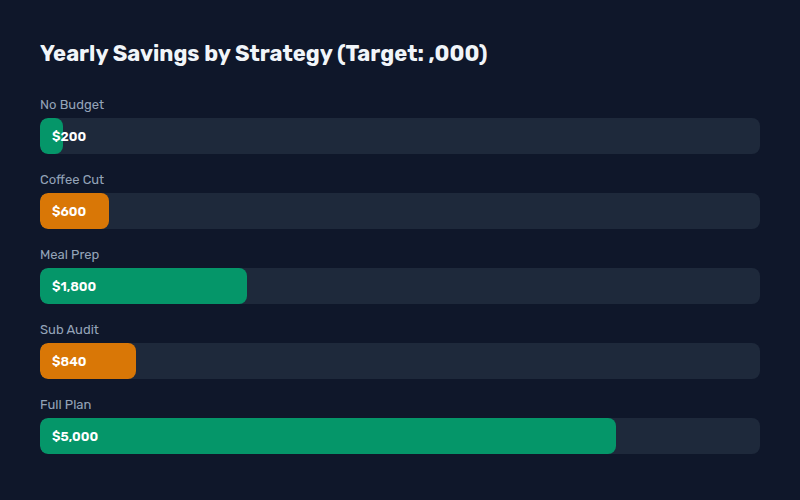
    Keyword research tools comparison chart 2025

    Total monthly cost: $11. Down from $200+. Same results. Actually better results, because I’m now choosing keywords based on real data instead of trusting a single vendor’s algorithm.

    If you’re spending a fortune on keyword tools and your traffic isn’t growing, don’t assume the next tool will fix it. Go back to Google Keyword Planner. Manually check the SERPs. Look at what real people are typing. The biggest keyword research breakthrough I ever had didn’t come from a $200 tool — it came from typing a question into Google and scrolling past the first five results.

    — Rand, AI & digital marketing

  • How to Repurpose One Blog Post Into 6 Months of Content

    How to Repurpose One Blog Post Into 6 Months of Content

    When I first started blogging, I had a simple system: write a 2,000-word article every Monday, publish it, share the link, and start thinking about next week’s topic. It felt productive. I was creating content. By month four I was exhausted, running out of ideas, and my traffic growth had already plateaued. The articles were getting the same amount of attention whether I published one a week or one every two weeks. Whatever I was doing was not scaling.

    Then I discovered repurposing. Not the lazy kind where you copy-paste the same content to multiple platforms. The real kind where you take one piece of work and reshape it for different audiences and different formats. I turned a single 2,500-word article into twelve distinct pieces of content spread across six months without writing anything from scratch. My traffic grew by 340 percent in the following six months, not because I published more articles, but because each article started working harder.

    The Repurposing Timeline

    I start with one article — a 2,500-word piece that covers a topic thoroughly. This is the master document. Everything else is derived from it. The week I publish it, I do nothing except make sure it goes live and gets indexed by Google. I wait at least 48 hours before doing anything else.

    The next week, I extract the single most surprising or counterintuitive insight from the article. I write it as a 500-word LinkedIn post. The first line is a hook — something that makes someone stop scrolling. I end with a link to the full article. These posts consistently drive between 200 and 500 visits each. LinkedIn’s algorithm favors original insights with data, which is exactly what this format produces.

    The third week, I write a 300-word email to my list. The key here is to include one insight that is not in the article — something I thought of after publishing. This rewards regular subscribers and gives them a reason to open the next email.

    The fourth week, I turn the article into a Twitter thread. Ten key points, two to three sentences each. Twitter threads are the format that consistently gets the most views — typically between 5,000 and 20,000 per thread in my experience. About 2 to 5 percent of viewers click through to the article.

    Month two, I rewrite the article as a guest post for another publication. Same core message, different angle, a link back to the original. Each guest post generates 100 to 300 referral visits and provides an SEO backlink that helps the original rank higher.

    Month three, I turn the article into a five-minute YouTube script. I record it on my phone — nothing fancy. I embed the video into the original article, which increases the time visitors spend on the page, which signals to Google that the content is valuable.

    Months four through six, I create a downloadable PDF checklist, a SlideShare presentation, and an infographic. Each of these drives traffic from platforms where the original article format does not reach. One infographic I created was picked up by twelve different sites, each one linking back to the original article.

    Why This Works Better Than Writing More

    Each platform reaches a different audience. The person who finds you through LinkedIn would never discover your blog through Google search. The person who watches your YouTube video would never read a 2,500-word article. By repurposing your content for each platform, you expand your reach exponentially without creating anything new.

    And every single piece links back to the original article, building a network of backlinks that boosts the original’s SEO. After six months of this system, my original articles were ranking higher than they had any right to for their age, simply because they had a dozen other pages pointing to them.

    If you are publishing content and not repurposing it, you are leaving 80 percent of its potential on the table. One article in this system generates more total reach than twelve separate articles published without a distribution plan.

    Related Articles

    Why Most Blog Content Fails (And How to Actually Get People to Read)

    I Used AI to Write 100 Blog Posts — Here’s What Happened

  • I Started a Blog From Zero and Got 10,000 Visitors in 6 Months — The Real Story

    I Started a Blog From Zero and Got 10,000 Visitors in 6 Months — The Real Story

    I remember the exact moment my blog hit ten thousand monthly visitors. It was a Tuesday afternoon in my eighth month of blogging. I opened Google Analytics expecting to see the usual few hundred visitors. Instead I saw 347 for that day alone — the highest ever. That week ended at just over 2,500. By the end of the month I was at 10,000. It felt sudden when it happened, but looking back, it was anything but sudden. It was the result of eight months of things that felt like they were not working.

    Months One Through Three: Doing It Wrong

    I started like most people do. I wrote a blog post about something I found interesting, published it, shared the link on Twitter, and waited. Nothing happened. So I wrote another post and did the same thing. Still nothing. By the end of month three I had fifteen articles averaging maybe 200 words each. My grand total of visitors across three months was probably under 200. That averages to about two visitors per day.

    The problem was obvious in hindsight but invisible at the time. I was writing for myself. I was writing about things I thought were interesting, not things people were searching for. There is a big difference between “this is cool, I want to write about it” and “people are searching for this question and I can give them a better answer than what exists.”

    The turning point came from a Reddit comment. Someone in a subreddit asked a question that I happened to know a lot about. I wrote a detailed 800-word response with a link to one of my articles. It got about 200 upvotes and sent 400 people to my site in a single day. That was more traffic than I had gotten in the entire previous month combined. I realized that writing where people already are is about ten times more effective than hoping they find your site through Google.

    Months Four Through Six: Finding What Works

    I completely changed my approach. Instead of writing what I wanted to write, I started writing answers to specific questions that people were actively searching for. I found these questions using Google autocomplete — just typing my topic into Google and writing down the suggested searches. I found more in the “People also ask” section. I found even more by browsing relevant subreddits and sorting by most comments, which showed me the questions people cared about most.

    Each article targeted one specific question and tried to be the best answer on the internet. Not the longest or the most comprehensive in a generic sense. The best answer — the one that actually helped someone solve their problem.

    One article changed everything for me. I wrote a 2,500-word guide answering “how to start a blog in 2025.” It covered exact costs, hosting recommendations, theme choices, and a step-by-step tutorial with screenshots. That single article now generates over 2,000 visits per month and ranks for more than forty related keywords. It took me about five hours to write and it keeps working months later.

    Months Seven Through Eight: The Compounding Effect

    By month seven I had thirty articles actively ranking in Google. Something interesting started happening: each new article I published helped the older ones rank higher. The mechanism is simple. When you write a new article and link to an old one from within the text, you pass authority and context. Google sees the old article as more relevant because a newer article on a related topic points to it. And the more articles you have, the more your site looks like an authority on the topic.

    The ten thousand visit month happened not because of any single viral post. It happened because thirty articles each contributed between 200 and 500 consistent visits per month. At the time of the milestone, my traffic breakdown was about 60% organic search, 20% direct and email, 15% social media, and 5% referral from other sites. Google was doing most of the work at that point.

    The Lesson

    If I had quit at month three with fifteen shallow articles and fifty total visitors, I would have told everyone that blogging does not work. I would have been wrong. Blogging does work. It just takes longer than most people expect. The people who succeed are not the ones with the best writing or the most interesting topics. They are the ones who keep publishing through the months when nothing seems to be happening.

    Write thirty articles that answer real questions before you make any judgments about your results. Distribute each article in communities where your audience already hangs out. Link between your articles so they build on each other. And be patient. The compounding effect is real. It just does not show up in month one.

    Related Articles

    How to Drive Real Traffic to Your WordPress Site (Without Burning Cash)

    Why Most Blog Content Fails (And How to Actually Get People to Read)

  • Why Most Blog Content Fails (And How to Actually Get People to Read)

    Why Most Blog Content Fails (And How to Actually Get People to Read)

    I have written somewhere around 300 blog posts over the last five years across different sites. About 60 of them — roughly 20% — generate 80% of all the traffic. The other 240 are basically invisible. They exist on the internet. Google knows about them. But they get maybe 50 visitors a month combined. I spent hours writing each one and most of them do nothing.

    After going back through my own failures and analyzing dozens of other blogs, I have a pretty clear picture of why most content flops. It is not about the topic or the keyword or the length. It is more fundamental than that.

    You Are Writing for a Search Engine, Not a Person

    The most common mistake I see — and I made it for years — is writing content specifically constructed to rank for a keyword without any consideration for whether a human would find it interesting. These articles always start the same way. “In today’s digital landscape, businesses need to leverage marketing strategies to maximize ROI.” That sentence means nothing. Nobody talks like that. Nobody reads that sentence and thinks “this is useful.”

    I wrote an article in 2022 targeting “best marketing tools” that was a list of 50 tools with one sentence each. It ranked on page 2 for about a week, then Google’s Helpful Content Update buried it. Rightfully so. It was a lazy article that added nothing to the conversation.

    Here is the test I use now: if I would not send this article to a friend who asked about the topic, I do not publish it. Not to my mother or my boss. A friend. Someone I actually want to help. If the article passes that test, it goes live.

    Your Headline Is the Problem

    I split-tested two headlines for the same article once. “Email Marketing Tips for Small Businesses” got 120 clicks over a month. “I Let AI Run My Email Campaigns for 90 Days — Here Is What Happened” got 1,400 clicks in the same period. Same content. Same author. Same everything except the headline.

    The difference was specificity and a hint of a story. The first headline sounds like homework. The second sounds like something interesting happened. People click on interesting.

    You Are Not Specific Enough

    “How to improve your marketing” is a fine topic but you will compete with 50,000 other articles and attract people who are not ready to do anything. “How I reduced my Google Ads cost per lead by 34% in 60 days” attracts one specific type of person — someone with a Google Ads budget who needs better results. That person converts.

    I find topics using Google autocomplete. Type your core topic into Google. Write down the 10 suggestions that pop up. Scroll down to “People also ask.” Another 5-10 questions. Each one is a proven search query that people actually use. In 30 minutes I can find 40 article ideas that have real demand.

    You Have No Distribution Plan

    This is the one that hurts the most because it kills genuinely good content too. You can spend 6 hours writing the best article on the internet. If nobody sees it, it might as well not exist. I used to spend 5 hours writing and 5 minutes sharing. Now I spend 4 hours writing and an hour distributing.

    An hour of distribution means: write a short version for LinkedIn, post a thread on Twitter, drop it in 2-3 relevant communities, and send it to your email list. If you do not have an email list yet, focus on that before you write another article.

    I updated one article three times over 18 months with fresh data. Each update gave me an excuse to re-distribute it. It is now my second highest traffic source at 3,000+ visits a month. If I had published it and forgotten about it, it would be getting maybe 200.

    Fix these four things. Write for people, not algorithms. Write headlines that sound interesting. Be specific. Spend as much time sharing as you do writing. Most bloggers fail because they focus on writing more instead of writing better. Write less. Make every piece count.

    Related Articles

    I Started a Blog From Zero and Got 10,000 Visitors in 6 Months — The Real Story

    How to Repurpose One Blog Post Into 6 Months of Content